

Voice AI Startup Wispr Is Launching A Lab To Bring 'J.A.R.V.I.S.' To Life
CEO Tanay Kothari says Wispr will hire up to 50 top researchers, at a commitment of hundreds of millions of dollars, in the pursuit of 'J.A.R.V.I.S.' technology.

Every day, across more than 10,000 businesses, millions of people dictate their words instead of typing them out using a tool from a startup called Wispr.
Tapping a button to record, they unload their thoughts and instructions on the product, Wispr Flow, and Wispr’s AI produces the text onscreen – cleaned up and grammatically correct, or more aggressively polished if the user asks.
For slower typers, people on the go or just those who need to verbalize to think through a task, it’s a nifty trick. Since Wispr Flow’s launch in 2024, it’s spread across staff at more than 450 of the Fortune 500, the startup says, with revenue growing at least 150% each quarter for the last year.
But for CEO Tanay Kothari, dictation is just the start. Since he was a 10-year-old kid in India watching Iron Man, Wispr’s co-founder has set his sights on a much more ambitious – but relatable – goal: he wants to build Jarvis (technically, “J.A.R.V.I.S.”), the AI voiced by a soothingly British-accented Paul Bettany in the film, who manages protagonist Tony Stark’s life.
Kothari’s talked about this vision before. Today, Wispr is taking a huge step in realizing it.
Wispr is throwing its hat in the ring as a full-fledged AI lab, Upstarts exclusively reports, with the creation of the Wispr Advanced Interfaces Lab Team under recently appointed chief science officer Ariya Rastrow.
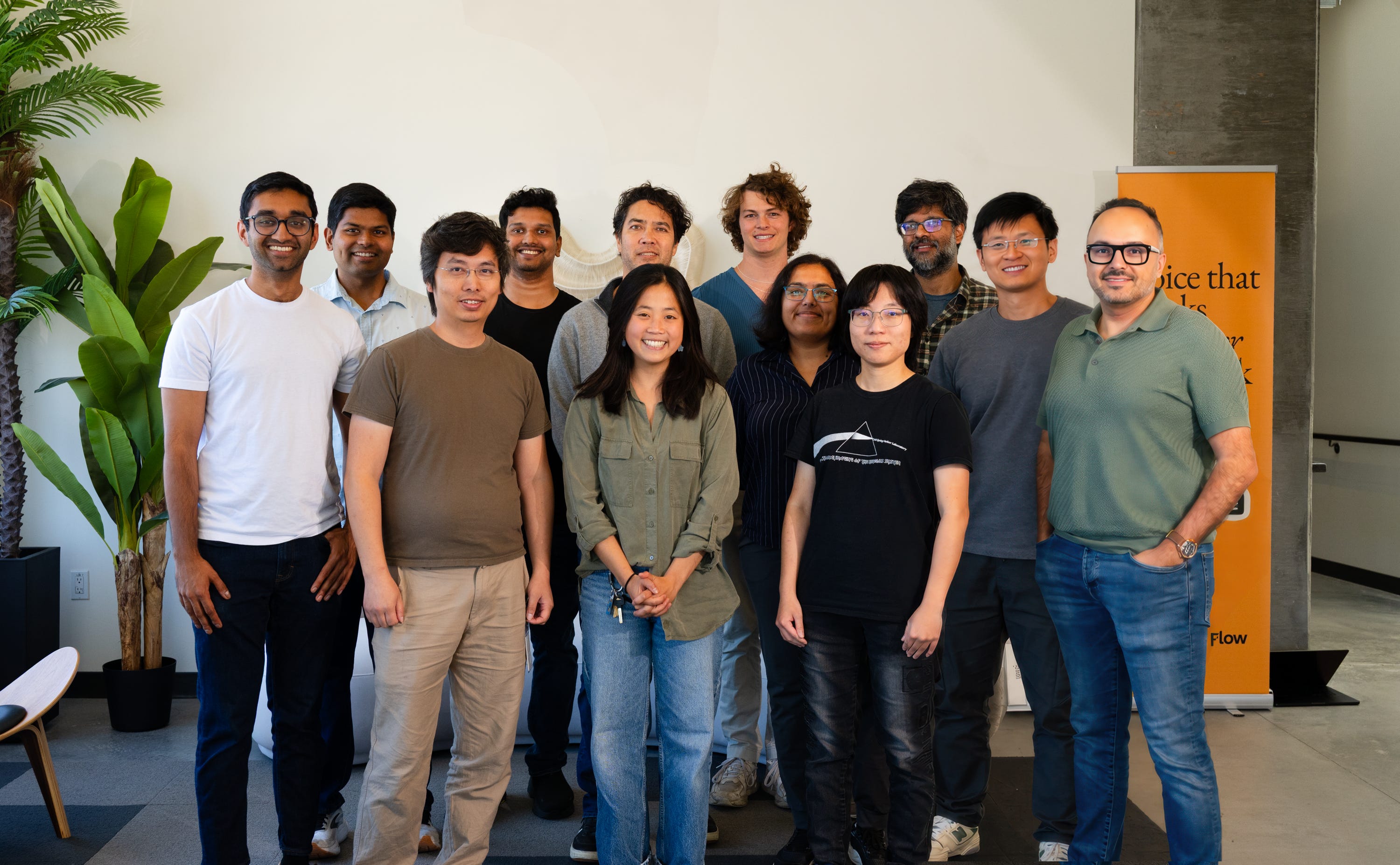
Rastrow, a highly-cited researcher and veteran of the founding team at Amazon that worked on Alexa and later as a distinguished AI lead at Meta working on voice and multi-modal models for its AI devices, has already assembled a team of about a dozen researchers from Amazon, Meta, and academia.
Wispr plans to hire up to 50 researchers for the Lab, representing a commitment of hundreds of millions of dollars. At a high level, their mission will be to develop a new family of voice AI models, and a harness to use them, that can start to work more proactively and intuitively with a user.
Rather than simply dictate instructions, or follow a turn-based conversation with a voice agent, Wispr envisions a more collaborative workflow, in which the interface is continuously learning from your recent actions, following what you’re doing on the screen using computer vision, and learning about you enough to understand nuanced instructions, while suggesting and running others behind the scenes.
“We want to meet people where they are,” says Rastrow. Think of Wispr’s coming system like a chief of staff learning by sitting next to you, and then hovering over your shoulder with a mandate to remove friction from your day, Kothari says.
It’s a big swing for Wispr, which Bloomberg reported was raising more than $250 million at a valuation of $2 billion back in May. Previous investors include Menlo Ventures, Notable Capital, NEA and 8VC.
(“This was part of what motivated us to start raising some more capital to be able to fund this and get the best talent,” Kothari says.)
And it’s one that could put Wispr more on a collision course with OpenAI, which announced its own voice models for natural language interaction, GPT-Live, earlier in July.
“We’re going to realize that this phase of clicking things, and typing things, was never what we wanted to be,” Greg Brockman, OpenAI’s president, said when Upstarts asked if he, too, wants to build Jarvis at a media roundtable this week. “A couple years from now, no one’s going to want to do that stuff anymore.”
Why should Wispr’s new Lab be the ones to drive that new paradigm?
More on that below, but in a nutshell: Wispr thinks its models will operate better for these purposes; that its interface will benefit from more than just the models themselves; and that users will want a neutral partner to guide them across all the apps they use, including but not limited to ChatGPT.
When might we see all this? Kothari says Wispr’s mission to bring movie magic to the real world isn’t years off, but coming soon.
“We are actually now building the model that powers and gets to Jarvis,” says Kothari.
The rest of this post – focusing on what Wispr’s Lab is building, how it’s building it, and why it can compete with the AI giants like OpenAI – is for paid Upstarts subscribers. Take 20% off an annual subscription as part of our Summer Sale, and get more startup news and founder interviews for less than the cost of a sandwich each month.